About Sleep Apnea
What is Sleep Apnea?
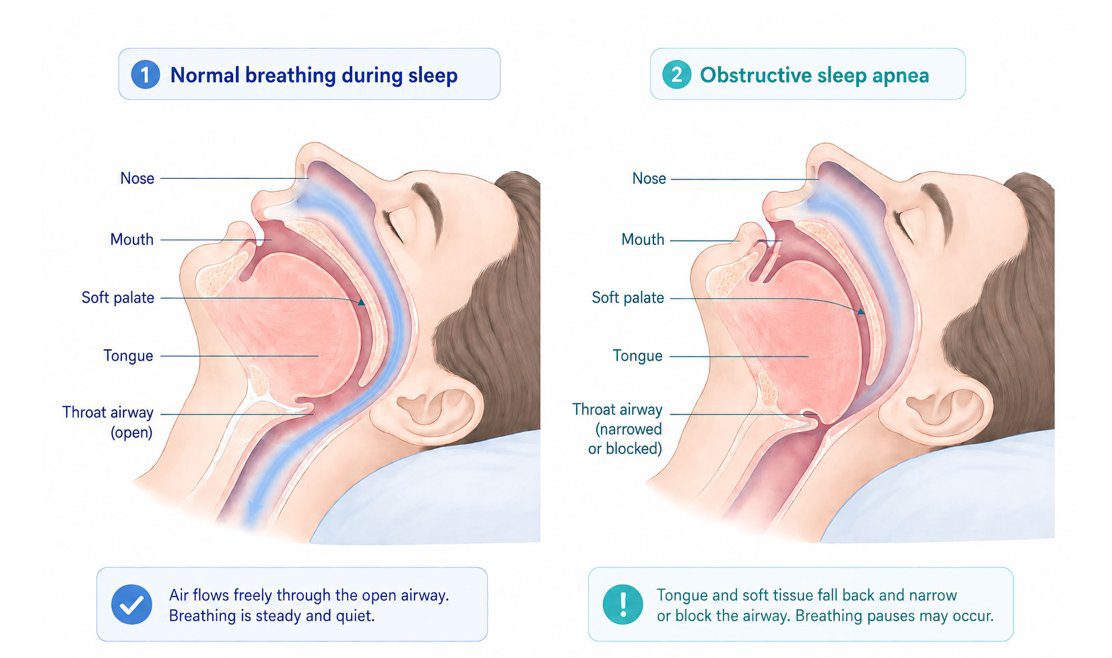
Obstructive Sleep Apnea (OSA) is a serious medical condition characterized by repeated breathing interruptions during your sleep. For an OSA patient, throat muscles relax excessively during sleep, causing the airway to collapse, resulting in a person’s breathing to repeatedly stop and start.
Health Risks Overview
Left untreated, OSA contributes to severe health risks including high blood pressure, heart disease, stroke, Type 2 diabetes, and dangerous daytime exhaustion that increases the likelihood of severe accidents. The main health risks you face by not treating your sleep apnea include:
Cardiovascular Risks
Repeated drops in oxygen levels put the body into a state of alarm, straining the heart and blood vessels.
- High Blood Pressure: Sleep apnea is a primary contributor to hypertension.
- Heart Disease: It increases the risk of heart attacks, heart failure, and irregular heartbeats like atrial fibrillation (AFib).
- Stroke: Reduced oxygen flow and cardiovascular strain heavily elevate the risk of strokes.
Metabolic Complications:
Sleep apnea alters how your body processes energy and regulates blood sugar.
- Type 2 Diabetes: There is a strong correlation between sleep apnea and insulin resistance, even independently of obesity.
- Metabolic Syndrome: It often coincides with high cholesterol, elevated blood sugar, and a larger waist circumference.
Cognitive and Mental Health Risks
Depriving your brain of restorative, deep sleep causes significant neurological and emotional strain.
- Exhaustion & Accidents: Severe daytime sleepiness and microsleeps (sudden, unintended episodes of sleep) highly increase the risk of workplace or traffic accidents.
- Cognitive Issues: Untreated sleep apnea causes difficulty concentrating, memory loss, and poor decision-making skills.
- Mood Disorders: Interrupted sleep negatively affects emotional regulation, contributing to depression, anxiety, and irritability.
Long-Term Prognosis
- Shorter Lifespan: Studies indicate that untreated severe sleep apnea can significantly reduce overall life expectancy.
- Other Complications: It is also linked to nonalcoholic fatty liver disease, erectile dysfunction, and dangerous complications when put under general anesthesia.
Do I Have Sleep Apnea?
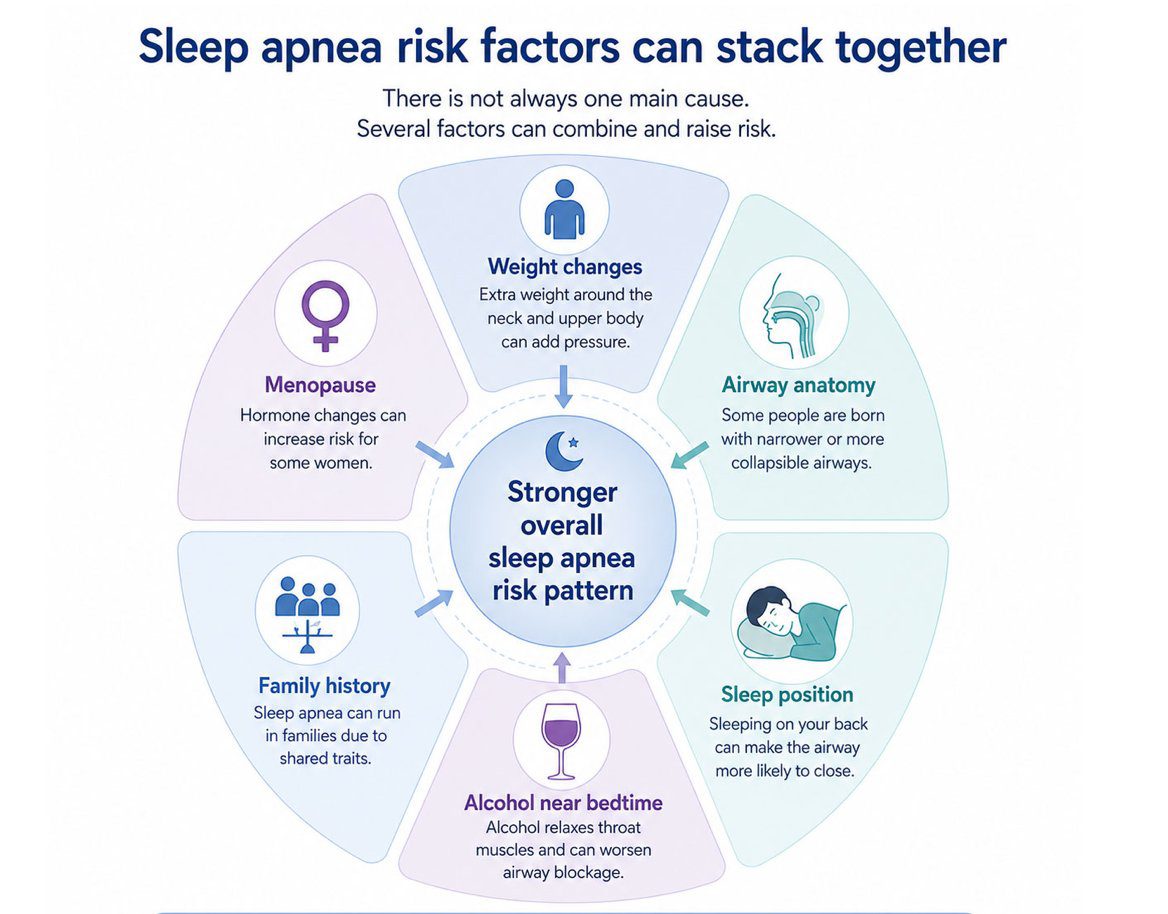
Sleep apnea is officially diagnosed with a sleep test called a polysomnography test. However, often times a person suspects they have OSA by the symptoms associated with it. These symptoms may include:
- Excessive daytime sleepiness
- Decreased cognitive function
- Observed episodes of breathing cessation during sleep
- Abrupt awakenings accompanied by gasping
- Loud snoring
- Waking up with a dry mouth or sore throat
- Morning headaches
- Difficulty concentrating during the day
- Experiencing mood changes, such as depression or irritability
- High blood pressure
- Nighttime sweating
- Frequent nighttime urination
- Decreased libido
- Scalloping of tongue
- Neck circumference of 16” or greater in women, and 17” or greater in men
Oral Appliance Therapy
Oral appliance therapy works best for people with mild to moderate sleep apnea. However, there are instances of severe sleep apnea cases where an individual may qualify for an oral appliance. Contact our office for more information.
Mandibular Advancement Appliances are also a convenient option for people who travel. It stores easily in a small container, and does not require sterile water or electricity to work.
Next Steps and Medical Consultation
If you suspect you might have sleep apnea, ask your primary care physician to refer you to a sleep medicine doctor who can prescribe a sleep study. Once you have the results of the sleep study, ask your sleep medicine doctor if an oral appliance (sometimes called Mandibular Advancement Device) is a good option for you.
Is CPAP the Only Option?
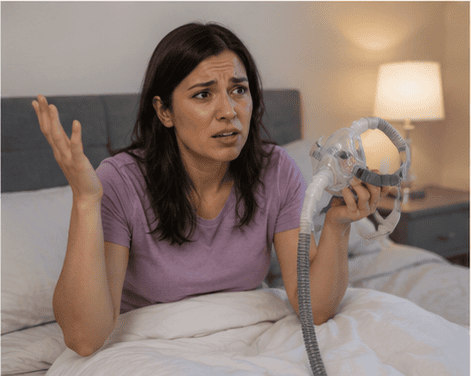
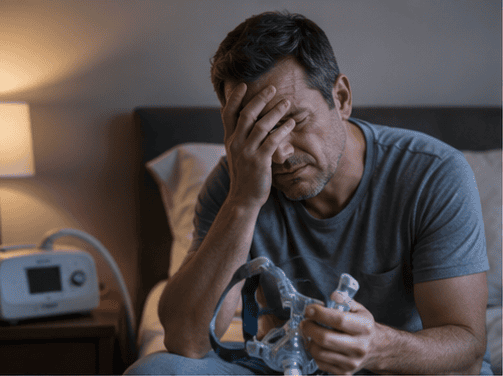
For those who find themselves wrestling with cumbersome masks, restrictive tubing, or the psychological burden of being tethered to a machine every night, oral appliance therapy (OAT) offers a highly effective and liberating alternative. These appliances (called Mandibular Advancement Devices) are compact, silent, and entirely self-contained. They don't require electricity, hoses, or sterile water. They offer vastly superior convenience for travel and everyday comfort, often leading to much higher rates of patient compliance. Switching to an easy-to-use oral appliance transforms sleep from an uncomfortable chore back into a natural, restorative experience. Our office can help you assess the best sleep solutions for you.
Get in Touch With Us
Contact us today for more information on how to get treated with oral appliance therapy.